Using Zoom Poker (and Spin & Gos) to Optimise Your Sessions
Poker is similar to sport. You battle against competitors to win glory and money. Over the long run, the strongest players come out on top, and maintaining top mental condition during your session is crucial to high levels of performance.
As multi-table tournaments (MTTs) last a good few hours, MTT players don’t have much choice when it comes to maintaining mental focus. But for cash grinders and sit & go players, the introduction of Zoom and Spin & Gos provide a convenient way of choosing exactly how long to play for.
Why do some Zoom players who play shorter sessions fare so much better than those who play for hours on end? Is the human attention span so weak that it needs such regular breaks? Or is there something deeper going on?
Optimal Performance
When you first start playing, your performance can be sluggish. Your poker mind is like an engine – it needs to warm up before it starts to approach maximum capacity. After about ten to fifteen minutes, if you are free from emotional interference (stress, tiredness, and distractions), you will start to enter your most efficient poker mode, popularly referred to as your ‘A-game’.
Your A-game will continue until something unsettles or distracts you, or until around 50-80 minutes into your session. This is the point at which most poker players start to experience a dip in their ability caused simply by reaching the objective limit of the human concentration span. Whether or not they consciously notice this dip is another thing. Unfortunately, the worse your game gets, the less you notice it. Setting a strict rule about session length is a great way to break the vicious cycle of unknowingly trundling along in second gear.
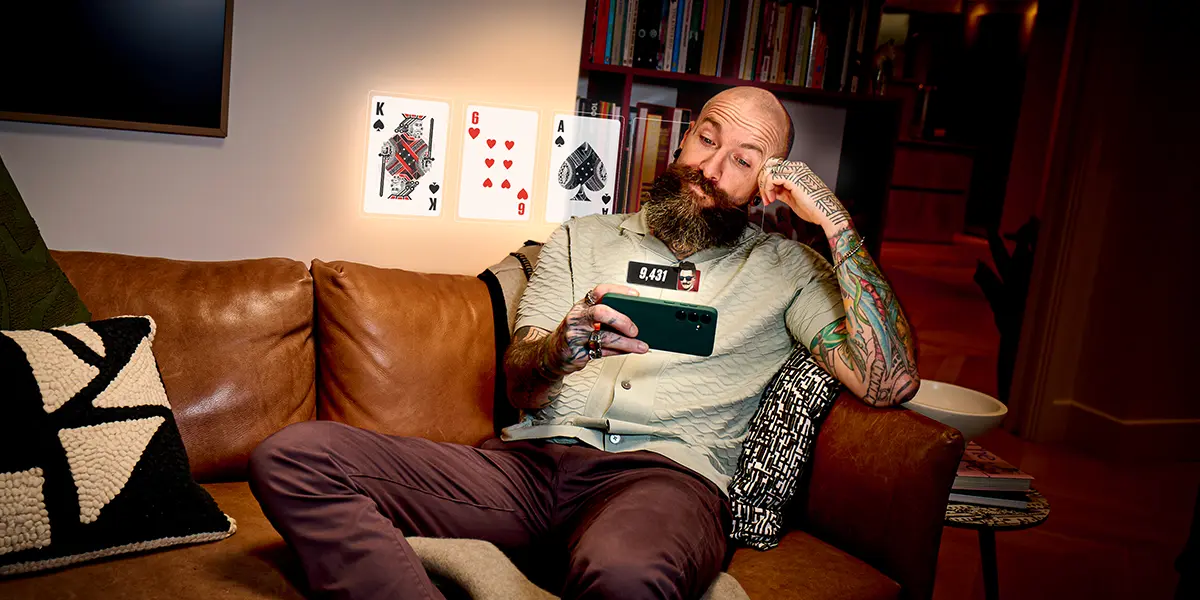
The Zoom Pool Will Still Exist in 15 Minutes
The reason that Zoom allows such flexibility in session length is that there are no juicy tables that cannot be left, and no set break times. Back in the day, when regular tables were the only option for the cash-game player, it was impossible to sit out for more than three orbits without losing your seat on that highly profitable table. Maybe you had position on the table donator and were mopping up their chips left, right, and centre. Under these circumstances, it was perfectly reasonable to play for three hours straight. You would sacrifice A-Game for a softer environment in which your C-Game was more than good enough to clean up.
Of course, regular tables still exist today and provide a great alternative to Zoom for cash players who prefer to build up more history with their opponents and capitalise on short-term dynamics. For those who would rather trade some of this element of the game for convenience and increased hands per hours, however, Zoom is king.
A recommended approach for Zoom players is to play for no more than 55 minutes at a time, with alarms set to designate ten-minute breaks between sessions. This strategy maximises the percentage of hands played in A-Game mode and avoids burnout. In this sense, taking regular breaks leads to the same number of hands played as one mammoth session, just in smaller, more focused clusters.
Autopilot in the Short-Term
When your game drops to such an extent that you stop consciously processing many of the situations that require problem solving, you are on autopilot. The short-term effect of this problem is that EV decreases through lazy non-engagement with hands. An autopiloting winning player might become a smaller winner or play a game that has no better than a break-even expectation. A break-even player, who is trying to break through at the next stake up, will quickly develop a losing expectation when on autopilot.
Autopilot really starts to take hold of your game between around 90 and 120 minutes. By the 2.5 hour-mark, most players have become poker zombies, functioning at maybe 20-30% of their A-Game power.
In the short-term, autopilot leads to lower EV, reduced enjoyment of the game, and a higher likelihood of emotional decision making. All of these things stunt your progress, and they are so avoidable for Zoom players.
Autopilot in the Long-Term
If you thought that was bad, the long-term effects of frequent autopilot are far more lethal. Repeated autopilot causes your brain to forget thoughts and concepts that once allowed you to grasp poker situations. The subconscious mind steps in during autopiloting spells and handles situations lazily, based more on attitudes and desires than on computational logic. This is fine for simple spots like folding 42o in early position; but for most spots, it misses the mark.
After a while, you forget how to walk on your own, leaning heavily on the crutch of automatic decision-making. This makes your conscious mind weaker. Like a muscle that doesn’t get worked, the conscious poker mind shrivels up and discards the thought processes it never gets to practice. This not only makes it harder to apply what you know at the tables, it also makes it near impossible to learn new things in a useable way. Often, students who frequently autopilot are avid studiers. Out of game they can rattle off explanations of tricky concepts, but they are not poker players. In game, they are non-thinking drones.
Autopilot, as a long-term habit, inevitably leads to parts of the poker brain shutting down. Two versions of the poker player are created. Out of game, they are curious and motivated, but in-game, they are a mere shadow of their full potential. Once you start playing long sessions and getting used to switching off your thinking brain, it can be very difficult to reverse the damage. A great solution for cash players is to use the convenience of Zoom to avoid the conditions that breed autopilot habits in the first place.

Spin & Go: A Shorter, Sharper Battle
The principles outlined above apply not only to Zoom, but even more intensely to Spin & Go players, especially for those who are multi-tabling. While traditional sit & go tournaments forced you to commit to a table until completion (thenyou’d have to register for the next one – especially if you spotted a weak player doing the same – much like old regular cash game tables where leaving meant losing your seat to a competitor,) Spin & Go offers the same pool flexibility as Zoom.
The key difference is that Spin & Go’s 3-handed hyper-turbo format and rapid decision-making demand even higher levels of mental focus. Each hand carries more weight, variance swings are more pronounced, and emotional decision-making can derail a session faster than in cash games.
- playing marginal spots that should be clear folds
- folding weak hands in situations where you have to limp/call with any 2 cards preflop
- shoving good hands preflop and playing coinflips instead of extracting value with them postflop.
The beauty of Spin & Go, like Zoom, is that the pool will be there after your break and you can return refreshed. For Spin & Go players especially, discipline around session length isn’t just about optimisation, it’s about survival in a format where autopilot is a quick path to the rail.
Summary
- Optimal session length is around 50-80 minutes for most people.
- Zoom and Spin & Gos allow the flexibility to structure short sessions to maximise performance.
- Long sessions lead to autopilot, which causes lower EV and more tilt in the short-term and a decline in your in-game skill in the long-term.
- For Zoom and Spin & Go players, these problems can be avoided with a bit of discipline.

View Other Blogs